


FOX 24 US
Isabel Flores used to have nightmares about her teeth falling out when she was young. To this day, the 56-year-old Arizonian does her best to take care of her teeth to prevent that from happening. But her teeth are very sensitive, and her past struggles with substance use weakened them. Around 10 years ago, a dentist told her that she was losing bone in her teeth, and that she needed an emergency deep cleaning to scale plaque from below her gum line. But Isabel was on Medicaid at the time, and Arizona does not offer adult dental benefits to its program recipients.
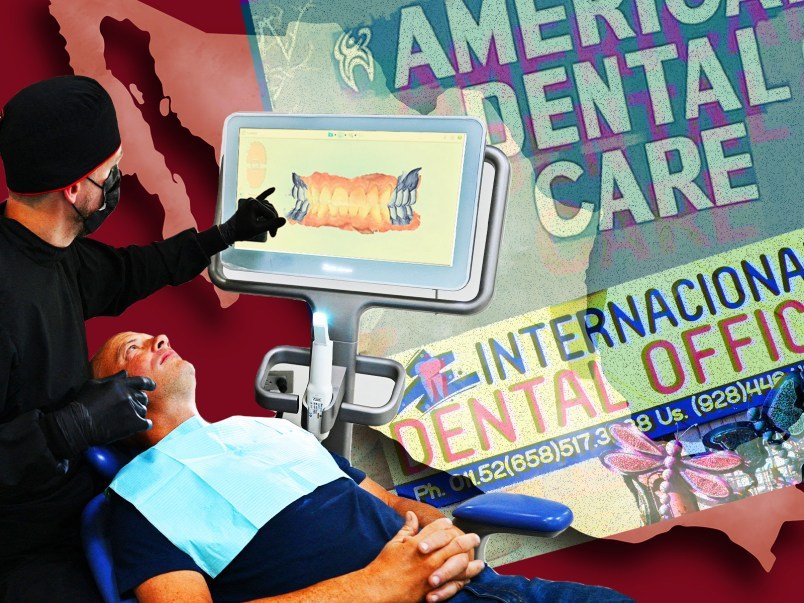
Isabel drove 15 minutes to the U.S.-Mexico border, and crossed into Los Algodones, sometimes called “Molar City” for its booming dentistry scene. She found a dentist working out of a room in an alley.
Isabel has returned to Los Algodones for dental concerns several times. Since then, her teeth have become increasingly sensitive to the point that chewing food is often painful; her bridge and her fillings need to be replaced. She questions the quality of the care she received, but isn’t sure how she will continue to care for her teeth. She stresses about missing work if she gets a toothache, which for her “is one of the worst pains that you can have,” she says. “It’s not like I could make an appointment here [in the U.S.].”
Now, the Trump administration’s healthcare policies are pushing more and more people like Isabel to consider unorthodox or even risky alternatives for healthcare, and particularly dental care. A new report from CareQuest Institute for Oral Health, a healthcare advocacy group, found that nearly 10 million Americans have traveled outside the U.S. for dental care — the most common form of medical tourism in the U.S. Fifty-eight percent of those dental tourists cited lower costs abroad and an additional 9% cited their lack of insurance coverage in the U.S. as their reason for going. The Journal of International Oral Health estimates that “costs for dental care in Mexico are usually 50%-75% less than what is charged in the United States.”
The most critical driver of dental tourism in the coming years may be Trump’s nearly-trillion dollar cut to Medicaid, which serves as a safety net for people with disabilities and those living under the poverty line. The budget shortfall delivered under HR1, or the One Big Beautiful Bill Act, is getting passed onto states, which are responsible for administering the program for their residents. While several states do offer adult dental benefits through Medicaid, it’s not required — already, several legislatures are eliminating or reducing dental coverage to trim their budgets.
To add insult to injury, on June 1 the Centers for Medicare and Medicaid Services released the interim final rule on the Medicaid work requirement, which demands extensive proof of inability to work and would likely push millions people off of Medicaid. CMS also reversed a 2024 policy that allowed routine adult dental services to be considered an essential health benefit in ACA Marketplace Exchange plans.
Older adults are also being pushed to consider unconventional alternatives to their local dentist. Original Medicare, the public insurance program for adults 65 and over, has no dental coverage. More than half of all Medicare recipients, and approximately 10% of the U.S. population, are enrolled in Medicare Part C, also known as Medicare Advantage, which are managed care plans run by private insurers. Researchers at Mass General Brigham found that the vast majority of these plans do offer some dental coverage — but only 8.4% met quality standards, like no co-pays for bi-annual cleanings. Medicare Advantage insurers are downscaling those offerings further in response to slowing reimbursement rates announced by the Trump administration.
Wade Rakes, the CEO of CareQuest, says he expects the upward trends around dental tourism to persist in the coming years. “It is very likely in the near term, absent significant policy change, that individuals facing those four-figure and five-figure bills are going to look at their options,” he told TPM.
Finding a Needle in a Stack of Other, Less Useful Needles
Dr. Scott Stafford’s 30-year career in dentistry has always been near the U.S.-Mexico border. As the director of the Practice Administration Program for the School of Dentistry of UT Health San Antonio, he is very familiar with the costs of dental care. He estimates that a $1,500 crown in the U.S. might cost $200 to $400 in Mexico. He digresses about the materials he has trained dental students to use — gold, porcelain, medical grade zirconia, titanium — and how they are cast, milled, and cemented according to specific standards. During his 20 years in private practice, he used to see approximately two to five patients a week who needed follow-up care or corrections from dental work done in another country.
Researchers document wide variations in standards of care between and within countries, infection prevention protocols and adherence to those protocols in practice, the durability of materials, and provider education.
“There’s no calibration, there’s no accountability,” Stafford says, describing variations in regulations, licensure, and dental education from country to country. “And so the standards of care and the accountability in other countries can be very different than what I believe our U.S. citizens are accustomed to.” His very first week in private practice, he saw a patient whose dentist in Mexico had completely missed the cancer growing on the floor of his mouth. He recalls another patient who crossed the border and was unknowingly given several adjacent crowns all as one piece, meaning she couldn’t floss between them, causing gum inflammation.
“To be fair, I don’t see the success stories,” Stafford acknowledges. “They don’t seek me out.”
Dr. Partha Mukherji is a professor at Texas A&M College of Dentistry, and also a 2025 Texas Dentist of the Year. He has seen some of those success stories, and he has also had tough conversations with patients whose foreign dental work needed corrections.
“I had one [patient] that came in for a denture adjustment, and they actually got their work done overseas,” he told TPM. “And I’ll be honest with you, it was probably the most beautiful dentures I’ve ever seen.” He describes the complex procedure involving extractions and implants. “The ones here in the U.S. can cost anywhere between 40 to 50,000 [dollars]. Overseas, I think they can be anywhere between 10 to 15,000.”
He also points out that limitations to what insurance will cover sometimes creates a lower standard of care for his patients in the U.S.
Finding unbiased information about dental care abroad is like finding a needle in a stack of other, less useful needles. The internet is flooded with influencers describing how they got their pearly whites in Istanbul, forums where hopeful patients ask for recommendations from fellow travelers, brokers who market practices and medical travel experiences to foreigners, and aggrieved malpractice victims warning against a particular dentist. It’s an industry that is expected to be worth $65 billion by 2032.
“I would like to dispel the conception that just because [dental tourism] is cheaper that it’s automatically horrible care,” says Mukherji. “I’ve seen a lot of great work, but then again, I have seen some places that are like, ‘Oh my god, I wish you didn’t go through that.’”

‘The Mouth Is Attached to the Body’
Deb, 72, and Mike, 78, have been married since 1979, one year after they met at a disco. The couple, who asked to go by just their first names to avoid any potential legal trouble, has lived in California for most of that time as educators. In their retirement, they kept up with their dental care despite having no dental coverage through Medicare. Then their dentist retired and the practice was bought by new management. They were quoted $2,000 each for a deep cleaning, and $5,000 for Mike’s four crowns — which wasn’t doable on their social security income. On the recommendation of a friend, they went to a dentist two hours away in Los Algodones who did the crowns for $1,200 instead, plus a $50 cleaning for Deb. Mike was able to receive the crowns on the same day as his fitting, rather than waiting multiple weeks as is common in the U.S. He says the work is holding up well two and a half years later.
“Seniors are at risk for some of the most needed but also most costly oral health procedures and services as they age,” says Rakes of CareQuest.
Over 30 bills to add dental benefits to Original Medicare have graced Congress since the 1990s, and were introduced in both chambers as recently as the 2025-2026 session. All attempts have failed, even though this is a solidly bipartisan issue: a 2021 Morning Consult poll found that 84% of U.S. voters and 79% of Republicans support the addition. Medicare dental coverage nearly became reality in the 2021 Build Back Better Bill, before opposition from Republicans and centrist Democrats saw it stripped from the final budget reconciliation (Nebraska Rep. Adrian Smith [R] called it “reckless government spending” at the time).
Even adults with private medical insurance may have no dental option. This is especially common for smaller employers with lower budgets. When Isabel Flores began getting commercial insurance at her job as an administrator at a small behavioral health agency, there was no dental plan, and she continued to get her dental care in Mexico. The last time Flores actually had her dental care covered was back in 2001, when she was incarcerated with the Arizona Department of Corrections.
But even for those who do have dental coverage, plan maximums kick in fast. People who reach their dental plan maximums are nearly three times as likely to have sought dental care outside of the U.S., according to the new CareQuest report. An organization that later became Delta Dental of California first began offering dental insurance in the 1950s “and at that time, the annual benefit was about $1,500 per person,” said Stafford. “And now we’re in 2026 and the average dental benefit from Delta Dental is $1,500.”
In the absence of coverage, costs are passed onto the patient. Dentistry is renowned as a high-overhead business, with operating costs exceeding 70% of revenue in some offices, according to Stafford. This is due to the nature of dental care, which he says almost always involves procedures with expensive equipment and materials. “Almost any time you come into the dental office, we are going to manipulate something. We are either going to perform a cleaning, or we’re going to remove tooth tissue and do a filling and replace it with a material,” he says. “The average drill is about $1,000. The chairs that you sit in are about $25,000.”
For Mukherji, the divide between medical and dental insurance doesn’t make sense for the health of Americans. He says that common chronic illnesses like cancer can have a negative impact on the teeth, and also that poor oral health is a risk factor for cardiovascular disease. Dental solutions are often part of treatment plans for airway issues and sleep disorders.
He puts it simply: “The mouth is attached to the body.”
Billboard Medicine
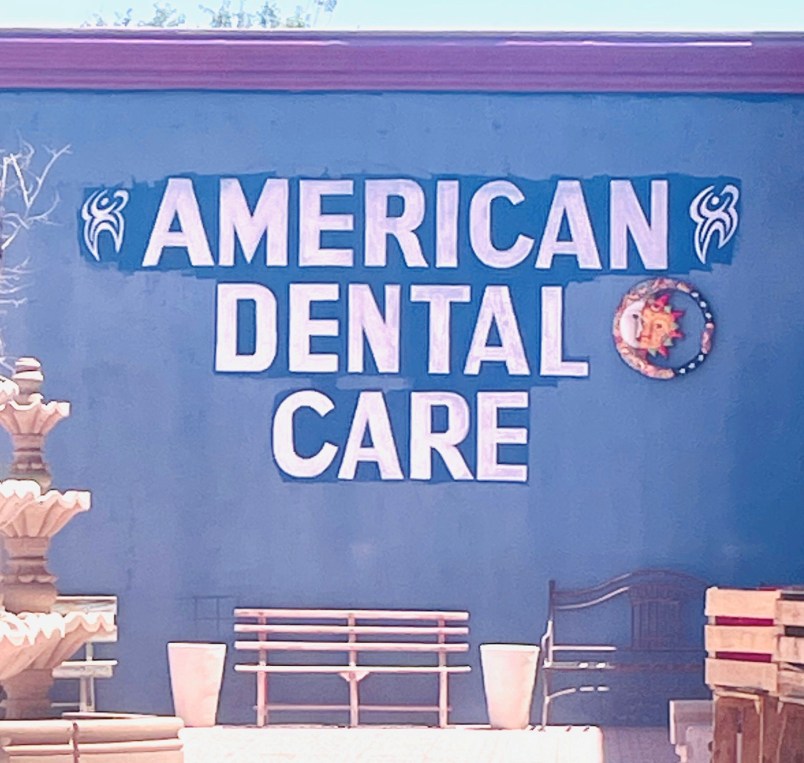
Within a few feet of the U.S.-Mexico border, the billboards begin. Dentists, opticians, and pharmacies vigorously advertise their affordable services in English to the Americans who have fallen through multiple safety nets. Flores and Deb and Mike visited two dental practices right next to one another in Los Algodones — but their experiences could not have been more different. Deb and Mike had their friend’s referral, and visited once before making an appointment to get their bearings. But Flores was desperate, and found a dentist through one of the many salespeople who wait on the Mexico side of the border to bring pedestrians directly to the practice they promote.
Despite its promise of affordability, dental tourism is plagued by similar inequities that brought people there in the first place. Just like in the U.S., patients are largely on their own, using their own resources to navigate an opaque system. Research suggests that dental tourism in Mexico and elsewhere booms while the oral health of the local population suffers.
In the absence of a better system, Mukherji says that patients should do their research regardless of where their dentist is. “Any provider that you see — doesn’t matter in your city, state, country, overseas, just always do your homework,” he says. “Look at their training, look at their regulations.” He also recommends patients communicate with their providers directly when something is unaffordable, because there may be other options, like low-cost care at dental schools or federally qualified health centers.
Flores knows she needs a lot of dental work, including some corrections for the care she received in Mexico. She thinks that she will look for sliding scale clinics in the U.S. first this time.
“It’s really disheartening that I can’t get the care here that I need, especially being born here,” she says. “I shouldn’t have to go somewhere else because I can’t afford it here.”
Even though dental care is cheaper in Mexico, it’s far from accessible. Although Deb and Mike liked their dentist in Los Algodones, the return trip across the border was physically difficult, as they stood in slow, long lines at the sparsely-staffed checkpoint. They don’t have plans to go back, as Mike now has a cardiac condition. “You’re talking about people in wheelchairs and walkers and canes all standing in the hot sun for over two hours,” Deb said.
“Every U.S. representative and senator should have to go to [Los Algodones] and stand in that line with their grandma, or with their elderly wife, or with themselves with a walker, to see what they are doing to us.”